Behind Utilizing AI Tools for Audio Case Studies

At Shortcut, we’re wired to move fast and break molds. It’s in our DNA. We’re obsessed with two things: exceptional design and finding faster, smarter ways to work. We believe that “shortcuts” come from deep experience, not from cutting corners.
That’s why we decided to reimagine the case study entirely. For a long time, case studies have felt… still. So, we tried something totally new: Audio Case Studies.
Our Audio Case Studies are a fresh, engaging way to experience our work. Think of them as “podcast-like” narrated cases, offering a dynamic and immersive dive into our projects. Our first Audio Case Study, featuring our work with MinIO, is a prime example. But how did we create this innovative format? Let’s pull back the curtain.
Audio Case Studies, Shortcut Style
We didn’t just start using AI. Our plan is based on really knowing the project and telling clear, good stories. It’s a balance of human ideas and tech speed, showing what we value: teamwork, understanding, and caring about details.
Gather the Ingredients
Just like any good story, you need the details. We transcribe key meetings and then prompt them to a reasoning model (Gemini 2.0 Flash Thinking in our case) to summarize each meeting, identifying key topics, decisions, action items, and participants. Most importantly, we double-checked every AI-generated summary. Providing context, like previous meeting summaries, helped the model build a cohesive narrative. We also included relevant news, videos, and blog posts about MinIO’s success, especially focusing on quotes and impact metrics. And we carefully labeled everything with dates to create a clear timeline for the AI.
The Special Ingredient: Human Touch
AI is powerful, but it’s not you. We sat down and wrote the story of the MinIO project from our perspective. What were the challenges? The breakthroughs? The moments that defined the collaboration? This human-written narrative became the backbone of our audio case study and gave it heart and authenticity. This is the part where we made sure any missing details from previous sources were added.
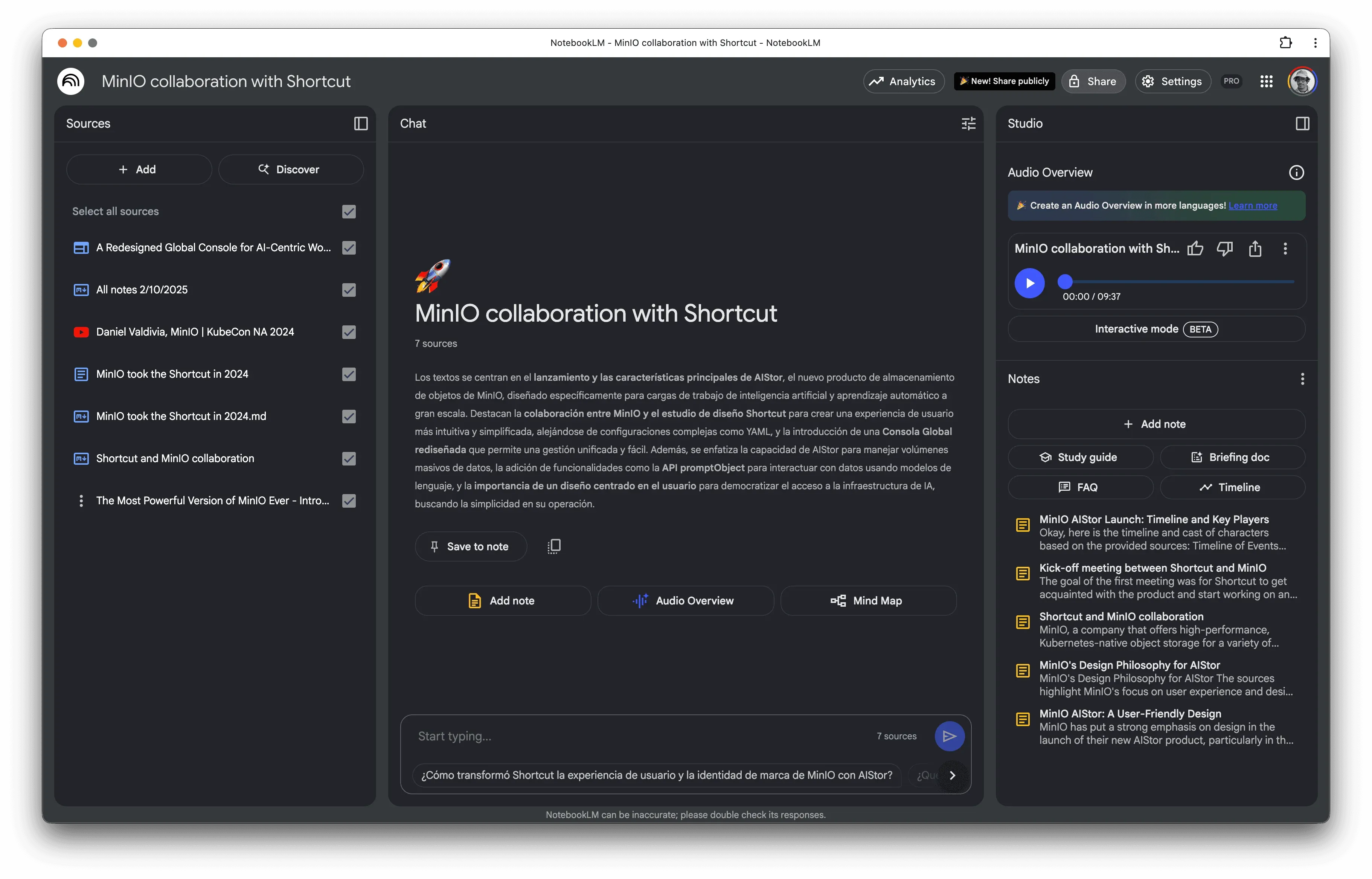
NotebookLM: Your Cooking Pod
Enter NotebookLM. This tool became our central hub. We uploaded all our sources (meeting summaries, our human-written story, everything) into NotebookLM. Then, we started to play. We used it to generate timelines, create briefing documents, and even fill in gaps in our memory by asking it questions based on the source material. It works as a super-smart research assistant that actually understands the context.
Crafting the Podcast Experience
Finally, the fun part: bringing the audio to life. One of the best features of NotebookLM is generating an audio overview in the form of a podcast called “Deep Dive”. Anyone can generate a podcast from information NotebookLM receives and processes. So we needed an extra layer of customization to ensure authenticity, adding crucial instructions before getting the right episode for our case study:
- Keep it concise and short (under 5 minutes)
- Speak to our audience (Shortcut customers and potential clients)
- Highlight Shortcut’s accomplishments for MinIO
- Make it engaging and a little bit “salesy”
Once you set it up, hit “Generate” and… just like that, our Audio Case Study was born! (after a few tries, of course).
The result? Something unique. As one commenter on our LinkedIn post put it:
“I have no idea what I just experienced 🤯 I was skeptical when I read ‘AI-generated audio summary’. I thought ‘here we go again’, especially when hearing the AI do fillers (‘uhm’, and so on). But once the other ‘person’ started talking and I started scrolling… insane!
Extremely stimulating, pairing such a human narration with interactions and visuals (both static and animated). Never experienced a case study like this before. You’re reaffirming my feelings towards Shortcut: pure excitement 🔥”
“Pure excitement” is what we’re aiming for.
We believe Audio Case Studies are more than just a trend (that we might be pioneering); they’re a powerful way to connect in a dynamic, engaging, and modern way.
To better experience the future of case studies, we suggest scrolling the content while listening to it, alongside the visuals of the work we’re proud to show.
Check out our first Audio Case Study with MinIO and let us know what you think! We’re just getting started. 🚀